

Dental Bridges
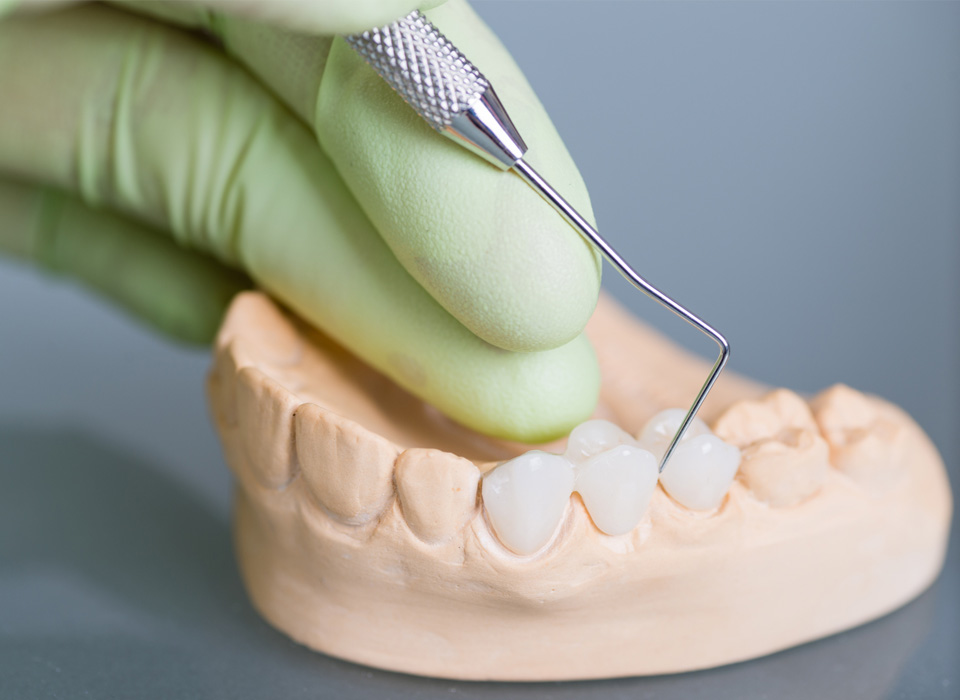

Tooth loss can impact your quality of life, from smiling less to difficulty with eating and chewing. However, replacing teeth is common practice, with results that can last for years. One popular tooth replacement treatment at our Beverly Hills office is dental bridges.
What Is a Dental Bridge?
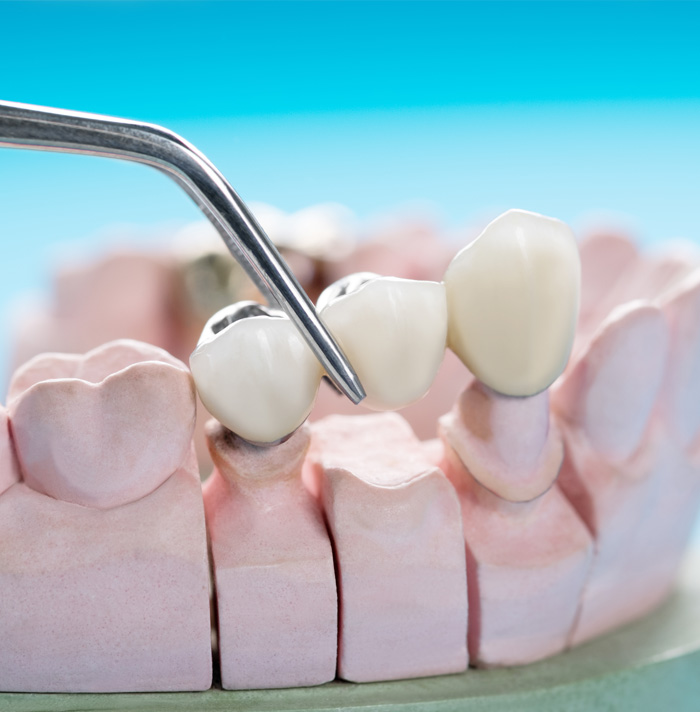
A dental bridge is a prosthetic made of artificial teeth to replace missing ones. Several types exist, but the common factor is that they use your remaining teeth to support the replacement ones. The most common type of bridge involves crowns placed on either side of a gap in your smile. Between those crows is a “bridge” of one or more teeth that are all connected.
Types of Dental Bridges
- Traditional Fixed: Consists of dental crowns on either side and artificial teeth linked between.
- Marland: Best for replacing front teeth. Uses a framework to attach to the back of teeth for a natural look.
- Implant-Supported: Affixes to dental implants but requires a surgical procedure first.
- Cantilever: Uses only one tooth as an anchor but provides less stability. Rarely used.
NO DENTAL INSURANCE?
NO PROBLEM!

Dental membership
NO ANNUAL MAX!
NO WAITING PERIOD!
NO LIMITATIONS!

Benefits of Dental Bridges
- Natural-looking teeth replacements
- Can replace multiple teeth and cover damaged ones
- Fewer steps than dental implants
- Minimal restrictions to diet
- Easy to maintain and care for
Dental Bridges FAQs
What is the process like?
- Consultation + Exam: First, we meet with each patient to evaluate their case and provide recommendations.
- Preparing the Anchor Teeth: The teeth on either side of the gap may need to be shaved down and shaped. Many patients may already have tooth decay on these teeth, so this can also remove decay.
- Taking Impressions: We then take impressions of your teeth, which we send to the lab. There, certified technicians will custom-make a bridge that looks like your natural teeth. We may also provide a temporary bridge while you wait for your permanent one.
- Placing the Bridge: Once we receive your bridge, you can come in to have it permanently placed. Before we anchor it to your teeth, you can test it. We want to ensure it looks natural and feels comfortable before placing it. By the end of this visit, your smile should be at its best.
Is a dental bridge right for me?
Dental bridges work best for patients who want a reliable solution for tooth loss. They are more affordable than implants but can still provide lasting benefits. Bridges also suit patients who need to replace teeth and cover damaged teeth, providing multiple solutions in a single treatment.
Dr. Rhonda Kalasho will consult with you beforehand to match you with your ideal tooth replacement option. Dr. Kalasho will provide comprehensive overviews of each treatment and professional recommendations. But you always will be the one in charge of your smile.
What are alternative treatments?
- Dental Implants: The longest-lasting tooth replacement option. Implants may involve a multi-visit process, but patients agree the results prove worth the effort.
- Dental Crowns: Crowns can restore teeth that are significantly damaged, making them effective as a way to prevent tooth loss.
- Dentures: Partial or full dentures can help patients overcome more significant tooth loss. These dental prosthetics look natural and last for years.
How long do dental bridges last?
Dental bridges typically last between 5 and 15 years, depending on how well they are cared for. Patients can prolong their bridge’s lifespan through attentive care and healthy oral hygiene habits. Steps to keep your dental bridges in good shape can include:
- Avoiding biting down on hard foods
- Healthy hygiene habits (brush twice and floss once daily)
- Visit your dentist for check-ups every 6 months
- Avoid contact sports or other injury-prone activities
Does insurance cover this treatment?
Dental bridges may improve the appearance of your smile, but they are, at their core, vital for your oral health. As such, most dental insurance plans provide coverage for at least part of the cost of bridges. The exact amount can vary, though. We recommend contacting your provider to see what your insurance can reimburse you for bridges.
We also offer TruGlo Memberships that allow members to access year-long savings on treatments. Each plan comes with unique benefits, including for both general and cosmetic dental care.
How much does a dental bridge cost?
The final cost of a traditional dental bridge depends on the type of the bridge and the number of teeth replaced. This typically ranges between $2,000 and $5,000. For example, replacing one missing tooth with a 3-unit bridge will cost less than replacing two teeth in a row with a 4-unit bridge. Replacing 3 missing teeth with a 5-unit bridge can cost up to $7500. Implant-supported bridges are significantly more expensive than traditional bridges as they involve a multi-step process with surgery. The price of an implant-supported bridge ranges between $7,000 and $15,000.
How long does it take to get a dental bridge?
Typically, it takes 2 to 4 weeks and 2 to 3 visits to a dental office to get a bridge. At the beginning of the process, your dentist will prepare the supporting teeth, make impressions of your teeth and bite, and place a temporary bridge. Then, a dental lab will make a permanent bridge for you, which may take 1 to 3 weeks, depending on how busy the lab is. Once the permanent bridge is ready, it will be fixed in your mouth, making sure that it is comfortable.
If you require additional procedures, the entire process is likely to take longer. For example, if a tooth extraction is needed, you may need to allow 2 to 4 weeks for the jawbone and gums to heal before the process of getting a bridge can even begin.
What are the different types of dental bridges?
The most common types of dental bridges include:
- The traditional bridge is supported by natural teeth on both sides of the gap. It can be ideal for people who have healthy supporting teeth and require stability and good chewing function.
- The cantilever bridge is supported only by one natural tooth and is typically not used for replacing teeth at the back of the mouth.
- The Maryland bridge is supported by a framework with metal or porcelain “wings” that are bonded to the backs of the adjacent teeth. This bridge is best for the front teeth, where chewing pressure is lower.
- An implant-supported bridge is attached to dental implants and provides superior stability without putting excess stress on surrounding teeth.
If you require additional procedures, the entire process is likely to take longer. For example, if a tooth extraction is needed, you may need to allow 2 to 4 weeks for the jawbone and gums to heal before the process of getting a bridge can even begin.
How do I care for and clean a dental bridge?
The most important dental bridge care and cleaning rules include:
- Brush your teeth twice a day for two full minutes, making sure you clean well along the gumline and in the bridge area.
- Floss thoroughly every evening, using special floss threaders to clean under the bridge.
- Use a water flosser in addition to traditional flossing and brushing to help dislodge and remove plaque and debris from under the bridge.
- Do not use your teeth as tools, as this way you can crack or break the bridge.
- Avoid staining foods and beverages, or rinse your mouth immediately after the meal if you consume them.
- Use a mouth guard at night if you experience bruxism (jaw clenching and teeth grinding).
Book Your Appointment
Dr. Rhonda Kalasho and the TruGlo team are the best-reviewed dentists in Beverly Hills. Call the office or use the online form to set up an appointment to take the next step toward a renewed, rebuilt smile. Receive personalized care in a modern office where every treatment leaves you smiling.