


Dental Implants
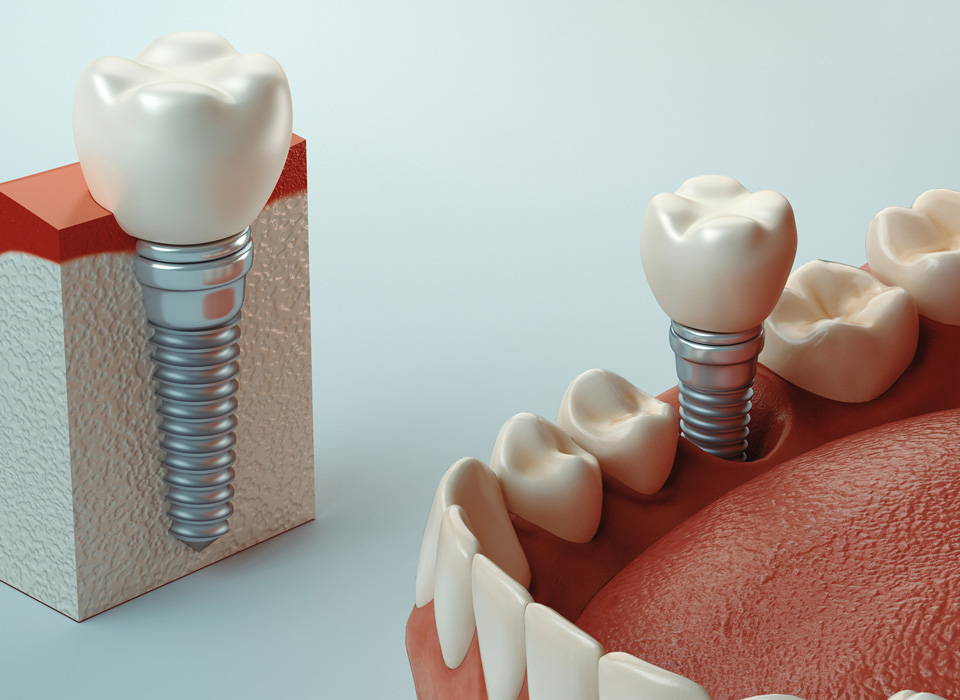
Losing a tooth, or several teeth, changes more than your smile. It can affect how you eat, speak, and feel about your appearance. At TruGlo Modern Dental in Beverly Hills, we provide dental implants built for lasting strength and a natural look. Our team creates a treatment plan around your specific needs so you can smile with confidence again.
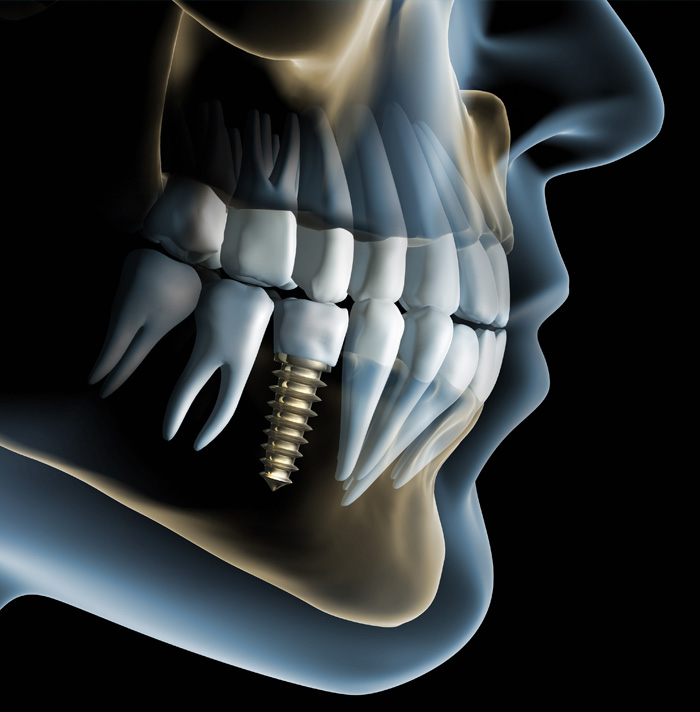
What Are Dental Implants?
Dental implants are the most reliable option for replacing missing teeth. A dental implant is a small titanium post that a dentist places directly into the jawbone. Over time, the bone grows around the post through a process called osseointegration. This creates a firm, stable base. Once healed, the implant acts as an anchor for a crown, bridge, or denture, giving you a replacement tooth that looks and functions like the real thing.
What You Can Do With Dental Implants
Most Popular Use: Single Tooth Replacement
Alternative Use: Implant-Support Dentures
Patients who need a full or partial denture may also benefit from implants. Instead of holding up a single crown, the implant posts anchor a custom denture in place. You can choose a denture that stays fixed permanently, or one that snaps on and off for easier cleaning. Each option offers its own set of advantages.
- Fixed Implant Dentures (Permanently Attached): Maximum stability and a more natural feel/function
Implant-Supported - Dentures (Removable): Easier to clean and repair
NO DENTAL INSURANCE?
NO PROBLEM!

Dental membership
NO ANNUAL MAX!
NO WAITING PERIOD!
NO LIMITATIONS!
The Process
The dental implant process typically involves several stages, from your initial consultation through placement of the final restoration. Treatment may include an examination, imaging, tooth extraction or bone grafting when necessary, implant placement, a healing period, and placement of the final crown, bridge, or denture. Your exact treatment timeline will depend on your oral health, the number of teeth being replaced, the condition of your jawbone, and the type of restoration you need.
Consultation and Examination
Your dental implant treatment begins with a comprehensive consultation and examination. Your dentist will evaluate the missing tooth or teeth, surrounding gums, remaining teeth, bite, and jawbone while discussing your goals and treatment options. This evaluation helps determine whether an implant is appropriate and whether additional procedures may be needed before implant placement.
Imaging and Treatment Planning
Dental imaging can help your dentist evaluate the condition of your jawbone and determine the ideal location for implant placement. Your treatment plan will consider the position of the missing tooth, surrounding anatomy, available bone, bite, and final restoration. Careful planning helps create a predictable foundation for the implant and the replacement tooth.
Tooth Extraction
If a damaged or unhealthy tooth remains in the area where an implant is planned, it may need to be removed before or as part of the implant treatment process. In some situations, an implant may be placed at the time of extraction, while other cases may require a healing period before implant placement. Our dentist will determine the appropriate approach based on the condition of the tooth and surrounding bone.
Bone Grafting
Some patients who have experienced significant bone loss may need a bone graft before receiving a dental implant. Bone grafting can help rebuild or strengthen the jawbone so it can provide adequate support for an implant. Whether you need a graft depends on the amount and quality of bone available in the treatment area, and some patients may not require this additional procedure.
Implant Placement
During implant placement, the dental implant is positioned into the jawbone where it will serve as an artificial tooth root. The procedure is performed using local anesthesia and, when appropriate, additional comfort options may be available. Once placed, the implant will need time to heal and integrate with the surrounding bone before the final restoration is attached.
Healing and Osseointegration
After an implant is placed, the surrounding jawbone gradually bonds with the implant through a process called osseointegration. This healing period is an important part of treatment because it allows the implant to become firmly anchored in the jaw. The length of healing can vary depending on your individual health, bone quality, implant location, and whether additional procedures such as bone grafting were performed.
Crown Placement
Once the implant has sufficiently healed and is ready to support a restoration, a custom dental crown, bridge, or denture can be attached. The final restoration is designed to complement your natural teeth in shape, size, and color while restoring the function of the missing tooth or teeth. We will evaluate the fit, bite, and appearance to help achieve a comfortable and natural-looking result.
Types of Dental Implants
Dental implants can be customized to address different types of tooth loss. Whether you are missing one tooth, several teeth, or an entire arch of teeth, implant treatment can provide a stable foundation for a natural-looking restoration. The appropriate approach depends on the number and location of missing teeth, the condition of your jawbone, and your individual treatment goals.
Single-Tooth Dental Implants
A single-tooth dental implant can replace one missing tooth without requiring the neighboring teeth to support a restoration. The implant is placed into the jawbone and serves as an artificial tooth root, which is then connected to a custom dental crown. This approach can provide a stable, natural-looking replacement while helping preserve the structure of the surrounding teeth.
Multiple Dental Implants
If you are missing several teeth, multiple dental implants may be used to support individual crowns or an implant-supported bridge. You do not necessarily need one implant for every missing tooth. Depending on the location and number of missing teeth, strategically placed implants can provide a stable foundation for replacing several teeth while restoring your ability to eat, speak, and smile comfortably.
Implant-Supported Bridges
An implant-supported bridge can replace multiple adjacent missing teeth without relying on natural teeth for support. Instead of being anchored to neighboring teeth, the bridge is secured to dental implants placed in the jaw. This can provide a stable alternative to a traditional dental bridge while helping restore the appearance and function of your smile.
Implant-Supported Dentures
Implant-supported dentures combine the stability of dental implants with the comprehensive tooth replacement provided by dentures. Rather than resting solely on the gums, the denture is supported or retained by dental implants. This can help reduce movement while eating and speaking and may provide greater comfort and confidence compared with traditional removable dentures.
Full-Arch Dental Implants
Patients who are missing most or all of their teeth may be candidates for a full-arch implant restoration. Instead of replacing every missing tooth with an individual implant, several strategically positioned implants can support a complete arch of replacement teeth. Full-arch treatment can provide a stable and functional solution for patients seeking an alternative to traditional dentures.
All-on-4 Dental Implants
All-on-4 dental implants use a small number of strategically positioned implants to support a full arch of replacement teeth. This treatment may be an option for certain patients who have lost most or all of their teeth. Candidacy depends on your bone structure, oral health, bite, and individual treatment needs, so a comprehensive evaluation is necessary before determining whether this approach is appropriate.
Who Is a Good Candidate for Dental Implants?
Dental implants may be a good option for adults who are missing one or more teeth and want a stable, long-term tooth replacement. Ideal candidates generally have healthy gums, adequate jawbone to support an implant, good oral hygiene, and realistic expectations about treatment. Patients with gum disease, significant bone loss, certain medical conditions, or other oral health concerns may need additional treatment before implant placement. During your consultation, your dentist can evaluate your teeth, gums, jawbone, bite, and overall health to determine whether dental implants are right for you.
Dental Implants vs. Bridges vs. Dentures
Dental implants, dental bridges, and dentures can all replace missing teeth, but they work in different ways. A dental implant replaces the root of a missing tooth and can support an individual crown or other restoration. A traditional bridge uses neighboring teeth for support, while traditional dentures are removable and replace multiple missing teeth. Implant-supported dentures combine implants with a denture restoration to provide additional stability. Your dentist can help you compare these options based on your oral health, number of missing teeth, budget, and long-term goals.
Benefits
- Incredibly long-lasting materials
- Benefits for up to a lifetime
- Maintain jaw bone health
- Enhance your smile’s look
- Boost confidence in your appearance
- Improve ease of speaking and eating
- Natural-looking results
FAQs
Is a dental implant right for me?
Dental implants stand as the longest-lasting option for tooth replacement. However, they might not prove the ideal solution for each patient with missing teeth. Dr. Kalasho meets with each patient individually to assess their situation. Based on your goals, oral health, and needs, she can match you with the right path forward to rebuild your smile.
Some signs that dental implants are right for you include:
- Being prepared for a longer process with a few steps
- Wanting a long-lasting solution
- Missing fewer teeth (unless for implant-supported dentures)
- Having sufficient jaw bone mass
- Having no current gum infections
What are alternative treatments?
- Dental Bridges: Best for replacing several teeth in a row. Requires fewer visits. However, these do not provide the same stability as dental implants.
- Dentures: Best for replacing larger numbers of teeth (or all of them). You can easily remove these for convenient care and cleaning.
How long do dental implants last?
A well-cared-for dental implant can last 25+ years (up to a lifetime). Our partnered lab uses premium materials designed for durability. So, our patients can count on having teeth replacements built to last and resist wear.
However, patients will still need to take care of their teeth at home. The good news is that good dental implant care looks exactly like good oral hygiene for the rest of your mouth. Set the foundation with brushing and flossing, and build on it with routine dental visits every 6 months.
You will still need to replace the “teeth” parts of dental implants, though.
- Dental crowns need replacing every 10 to 15 years on average. Longevity depends on the material and maintenance.
- Fixed implant dentures can last 10 to 15 years as well.
- Implant-supported dentures tend to last 7 to 10 years before needing a replacement
Does insurance cover this treatment?
Do dental implants look and feel natural?
Implants can rebuild a natural-looking, beautiful smile. However, you need a dentist with the appropriate experience to perform the implant procedure. Poorly placed or low-quality implants can ultimately cause issues down the road. When done right, implants should blend in seamlessly with your natural teeth.
Keep in mind that it may feel a little strange for a few days, especially if you’ve had a gap in your smile for years. Implant-supported teeth do not have nerves. So it can take a measure of time to get used to them. Once you do, you’ll likely forget you were ever missing a tooth to begin with.
How much do dental implants cost?
The cost of dental implants in Beverly Hills tends to be between $3,000 and $6,000 per implant. Total costs will depend on factors like:
- Type of replacement (single crown versus dentures)
- Material of the replacement (porcelain, ceramic, etc.)
- Need for preparatory work (e.g., extraction, bone grafting)
- Expertise of your dental implant specialist
Can dental implants fail?
Like any procedure, dental implants do not have a 100% success rate. But we have two pieces of good news:
- The success rate is above a 95% average
- You can take steps to further reduce the risk of implant failure
Most dental implant failures happen due to:
- Smoking (reduce risk by not smoking)
- Infection (reduce risk by following all pre- & post-procedure instructions)
- Medical conditions (reduce risk by being open about your medical history)
- Insufficient bone support (reduce risk by first having a bone graft)
How Long Does the Dental Implant Process Take?
The total dental implant timeline varies from patient to patient. A straightforward case may require fewer treatment stages, while patients who need tooth extraction, bone grafting, or treatment for gum disease may require additional healing time. The process can include consultation and planning, implant placement, a period of osseointegration, and placement of the final restoration. During your consultation, your dentist can provide a more personalized estimate based on your specific treatment plan.
How Do I Clean Dental Implants?
Dental implants should be cared for with consistent oral hygiene. Brush your teeth regularly, clean between your teeth and around the implant, and maintain routine professional dental cleanings. Depending on your restoration, your dentist may recommend specific flossing tools or interdental cleaning methods to help keep the implant and surrounding gums healthy
Can I Eat Normally With Dental Implants?
Book Your Appointment
Give your smile the second chance it deserves with dental implants in Beverly Hills at TruGlo Modern Dental. Call our dentist office or use the online form to set up your next visit with a leading dental care provider.